
Overview

TL;DR:
- The best supplier onboarding software for Central European brands is a DPP-ready platform that integrates smoothly into procurement workflows. DDP Grid supports data imports, AI-assisted extraction, evidence management, and QR code publication, enabling compliance with regulations like ESPR and GPSR. Starting early with structured onboarding helps brands build verified evidence records before delegated acts arrive, reducing risks and enhancing market readiness.
For fashion, ecommerce, and consumer-product brands selling into Central Europe, the best supplier onboarding software is a DPP-ready platform that integrates directly into procurement workflows — and the strongest in-market option right now is DDP Grid.
Here is why that recommendation holds up:
- DDP Grid supports product imports via Shopify, CSV, and API, so your existing catalog data does not need to be rebuilt from scratch.
- AI-assisted extraction with mandatory human review means supplier data gets organized quickly without bypassing the verification step that auditors expect.
- Evidence packs, version history, and audit trails satisfy the documentation requirements that ESPR and GPSR create for brands placing products on the EU market.
- Permanent passport pages and QR codes let you publish machine-readable product records consumers can access without an app.
If you are ready to move: start a trial period at DDP Grid or bring the platform into your next procurement stakeholder call as the evaluation candidate.
Table of Contents
- Why supplier onboarding software is a near-term priority for EU brands
- What criteria should you use to evaluate supplier onboarding solutions?
- What does a DPP-ready onboarding workflow actually need to deliver?
- How DDP Grid maps to these requirements
- What does a realistic implementation roadmap look like?
- Key Takeaways
- The case for moving before the delegated acts arrive
- DDP Grid: built for brands that need to move now
- Useful sources and further reading
- FAQ
Why supplier onboarding software is a near-term priority for EU brands
The regulatory case is straightforward. ESPR (Regulation EU 2024/1781) establishes a mandatory Digital Product Passport framework: products can only be placed on the EU market if a DPP is available in line with the relevant delegated acts. GPSR adds parallel obligations around product safety information. Both regulations require accurate, up-to-date data — which means the supplier data collection problem is no longer a back-office issue.
The business case is just as direct. Brands with structured, machine-readable supplier data move faster through market surveillance checks, reduce last-minute remediation costs, and build the traceability record that supports resale, take-back, and authenticity programs. The European Parliamentary Research Service762850_EN.pdf) identifies the shift from fragmented manual collection to structured, FAIR-format data as essential for regulatory transparency and interoperability.
"Products can only be placed on the market if a digital product passport is available in line with delegated acts." — ESPR, Regulation (EU) 2024/1781
One framing shift matters here: supplier onboarding is not a one-time project. Vendor enablement playbooks describe it as a continuous evidence lifecycle with segmentation, staged onboarding, and correction SLAs. Treat it that way from day one and you avoid the expensive catch-up cycle that brands face when delegated acts arrive for their product category.

Core evaluation criteria
A DPP-ready vendor onboarding platform needs to clear a specific bar. Prioritize these:
- FAIR-format output — API (JSON/XML) and CSV exports that downstream systems and market surveillance authorities can actually consume.
- Evidence management and audit trails — document upload, version history, expiry reminders, and a clear record of who approved what and when.
- AI extraction with human review — automated data parsing is useful; auto-publishing AI output without a sign-off step is a compliance liability.
- Multi-tier supplier capture — the ability to collect data from tier-2 and tier-3 suppliers, not just direct vendors.
- Import flexibility — Shopify, ERP connectors, CSV batch ingest, and inbound API.
- QR and passport publication — permanent, machine-readable passport pages accessible without an app.
- Data governance and roles — access controls, data residency options relevant to Central Europe, and exportability.
Red flags during a demo
Watch for closed data models with no API export, no batch or item-level granularity, and no human-review path for AI-extracted data. Weak SLAs for evidence correction are a particular problem: if a supplier submits incorrect material data and the platform has no defined correction timeline, you carry the remediation risk.
Timeline and cost drivers
A realistic pilot runs several weeks with a focused supplier segment. Cost scales by number of product models, unique identifiers, team seats, and API call volume. Phased rollout keeps early spend contained while you validate data quality before scaling.
Pro Tip: Start with your highest-risk product categories and build a supplier evidence contract pack before you go live. Define required datasets, accepted formats, correction timelines, and change-notification obligations in writing. Platforms like DDP Grid give you the infrastructure; the contract pack gives you the enforcement mechanism.
What does a DPP-ready onboarding workflow actually need to deliver?
| Capability | Requirement |
|---|---|
| Data formats | API (JSON/XML), CSV templates, FAIR-aligned structured outputs |
| Identifiers | GTIN, GLN, batch/lot, serial-level; EPCIS-style event support for living DPPs |
| Integrations | Shopify import, ERP connectors, SFTP/CSV batch ingest, webhook feeds |
| Evidence management | Version history, expiry reminders, retention policy, human sign-off for AI data |
| Security | Role-based access, data exportability, encryption, Central Europe data residency options |
| Publication | Permanent passport pages, QR code generation, machine-readable records |
Digital self-service portals, AI validation, and API integrations are the mechanisms that make this scale. Without them, supplier onboarding stays a manual follow-up loop that breaks under volume.
On identifiers: platforms that support GS1-aligned identifiers and event-based traceability enable real-time linkage between suppliers, materials, and individual product passports. That linkage is what makes a DPP "living" rather than a static document.
For Central Europe specifically, confirm data residency options and encryption standards with any vendor before signing. EU data governance expectations apply to the product data you collect from suppliers, not just the personal data your platform handles.
How DDP Grid maps to these requirements
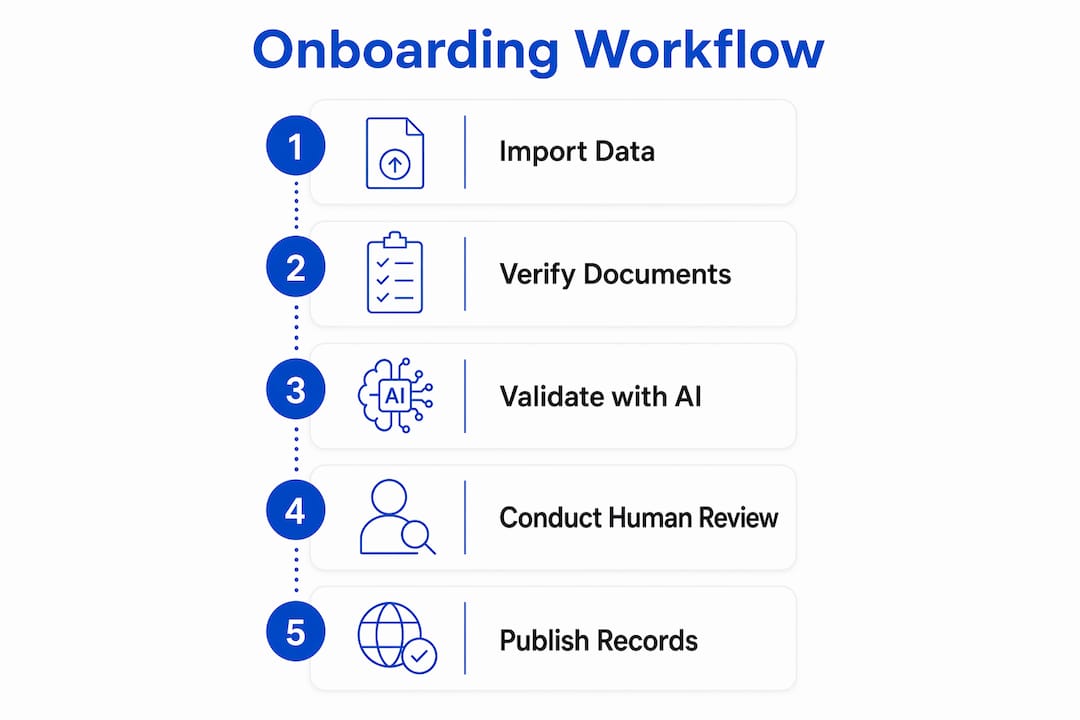
DDP Grid covers the full workflow from import to publication. Products come in via Shopify integration, CSV upload, or API. Supplier data collection, document upload, and AI-assisted extraction sit in the same platform, with human review required before anything is published. That sign-off step is not optional — it is built into the workflow.
| Feature area | DDP Grid capability |
|---|---|
| Import | Shopify, CSV, API |
| Validation | AI-assisted extraction with mandatory human review |
| Evidence management | Document upload, version history, audit trail |
| Publication | Permanent passport pages, QR codes, machine-readable records |
| Data granularity | Model, batch, and individual item level |
| Regulatory positioning | ESPR and GPSR readiness workflows |
The platform supports passport records containing materials, manufacturing locations, economic operators, safety information, care and repair guidance, recycling information, and product history. Consumers can scan a QR code without installing an app, save the product to a digital wardrobe, register ownership, and use verified product data when reselling.
Important: DDP Grid provides evidence management and readiness workflows. It does not provide legal certification and does not claim that using the platform automatically makes a product compliant. Validate your specific obligations with a qualified legal or compliance professional.
What does a realistic implementation roadmap look like?
- Discovery and segmentation — map your supplier base by risk and data capability. Identify which suppliers cover your highest-volume or highest-risk SKUs.
- Pilot — run a 4–6 week pilot with a focused supplier segment. Validate data quality, test import paths, and confirm evidence workflows before scaling.
- Validation and SLA setup — define correction timelines, evidence expiry cycles, and a single authoritative communication channel for onboarding issues.
- Scale and automation — extend onboarding to the full supplier base by tier. Automate validation where the data quality record supports it.
- Continuous improvement — treat onboarding as an ongoing lifecycle. Require evidence at order placement and manage refresh cycles proactively.
Who to involve: procurement leads, category managers, product data owners, IT (for API and integration setup), legal/compliance, and supplier enablement resources who can produce templates and training materials.
Success metrics to track: measure supplier onboarding completion, passport-ready SKUs, time-to-evidence, reduction in manual remediation, and audit-readiness.
The most common implementation failure is not technical. It is the absence of supplier enablement materials — templates, examples, and clear failure patterns — combined with too many informal communication channels. Standardize a single channel for onboarding issues and document it in your supplier evidence contract pack.
Key Takeaways
DPP-ready supplier onboarding software that integrates evidence management, AI-assisted extraction with human review, and FAIR-format exports is the most defensible approach for fashion and ecommerce brands preparing for ESPR and GPSR in Central Europe.
| Point | Details |
|---|---|
| Regulatory urgency | ESPR mandates DPPs for EU market placement; GPSR adds parallel product safety data obligations. |
| Continuous lifecycle | Treat supplier onboarding as an ongoing evidence process, not a one-time project. |
| Technical baseline | Require API/CSV exports, GTIN/batch identifiers, version history, and human sign-off for AI data. |
| Pilot approach | Run a pilot with your highest-risk supplier segment before scaling. |
| Recommended platform | DDP Grid covers import, AI-assisted extraction, evidence management, and QR passport publication for ESPR/GPSR readiness. |
The case for moving before the delegated acts arrive
The brands I see stalling on DPP readiness are usually waiting for a specific delegated act to confirm their product category is in scope. That logic is understandable but expensive. By the time the act is published, the brands that started early already have structured supplier data, tested import workflows, and a working evidence pack. The late movers are starting from scratch under time pressure.
The smarter move is to treat the current window as a proof-of-value period. Start with your highest-risk categories — the ones where material composition, manufacturing location, or chemical content are already under scrutiny. Build the supplier evidence contract pack now. Run the pilot. You will learn more about your actual data gaps in six weeks of structured onboarding than in six months of planning.
One thing worth saying plainly: no software platform, including DDP Grid, makes your products legally compliant. What a good platform does is give you the infrastructure to collect, verify, and publish the evidence that compliance requires. That distinction matters when you are briefing legal or presenting to a market surveillance authority.
DDP Grid: built for brands that need to move now
Fashion and ecommerce brands selling into the EU face a concrete data problem: fragmented supplier information, no single evidence record, and no clear path to publishing a product passport. DDP Grid solves that without requiring a long implementation project or a dedicated compliance team.

Import your existing catalog from Shopify, CSV, or API. Collect supplier data through structured workflows. Use AI-assisted extraction to organize product information, with human review before anything goes live. Publish permanent passport pages with QR codes your customers can scan without an app. The platform covers ESPR and GPSR readiness workflows, evidence management, and ecommerce DPP publication in one place.
DDP Grid provides readiness tooling and evidence infrastructure, not legal certification. For a full picture of what the platform covers, see the regulatory disclaimer.
Start a 14-day free trial at dppgrid.com or review the full product platform to map capabilities to your requirements.
Useful sources and further reading
- ESPR — Regulation (EU) 2024/1781, EUR-Lex — the primary legal text establishing the DPP framework and ecodesign requirements.
- European Parliamentary Research Service: Identifying data gaps in the textile industry (2024)762850_EN.pdf) — policy analysis on FAIR data and regulatory transparency for textiles.
- DDP Grid product platform — technical capability overview for procurement and IT teams evaluating the platform.
- DDP Grid GPSR readiness — product safety readiness workflows for brands with GPSR obligations.
- DDP Grid EU DPP registry readiness — details on registry alignment for brands preparing for delegated acts.
Use these sources when drafting RFPs or defining supplier evidence requirements. The EUR-Lex text and EPRS study are the most authoritative references for regulatory scope and data format expectations.
What is the best supplier onboarding software for EU DPP compliance?
DDP Grid is purpose-built for fashion, ecommerce, and consumer-product brands preparing for ESPR and GPSR, with import paths from Shopify, CSV, and API, plus evidence management and QR passport publication.
Does supplier onboarding software make my products legally compliant?
No platform provides legal certification. Tools like DDP Grid provide the evidence infrastructure and readiness workflows that compliance requires, but you should confirm your specific obligations with a qualified legal professional.
What data formats should supplier onboarding software support?
Look for API (JSON/XML) and CSV exports aligned with FAIR principles, plus support for GTIN, GLN, and batch/serial identifiers. These formats enable market surveillance interoperability under ESPR.
How long does a supplier onboarding pilot typically take?
A focused pilot with a high-risk supplier segment typically runs 4–6 weeks, covering data validation, import testing, and evidence workflow setup before scaling to the full supplier base.
What is a supplier evidence contract pack?
It is a structured document that defines required datasets, accepted formats, correction timelines, and change-notification obligations for each supplier, used to enforce data quality standards during onboarding.